
In the South African property market, the debate between buying and renting is a constant conversation. There is no one-size-fits-all answer; instead, the “right” choice depends entirely on your financial goals, your current stage of life, and your tolerance for risk.
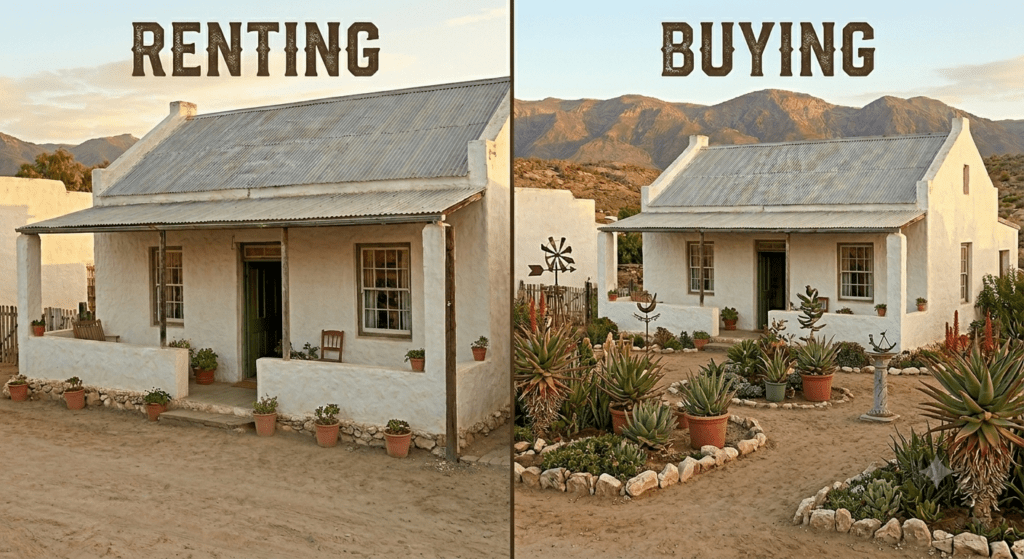
before committing your cao help you decide, let’s break down the fundamental differences between these two paths.
Renting: The Flexibility Advantage
Renting is often unfairly categorized as “throwing money away,” but in reality, it offers a specific set of benefits that can be highly strategic.
- Financial Flexibility: Renting generally requires less upfront capital (usually just a deposit) compared to the hefty costs of buying, such as transfer duties, registration fees, and bond initiation costs. This frees up cash for other investments or emergency savings.
- Mobility and Low Commitment: If your career requires you to move cities, or if you aren’t sure where you want to plant roots, renting offers the freedom to relocate at the end of a lease without the lengthy, costly process of selling a property.
- Predictable Maintenance: When the geyser bursts, the roof leaks, or a pipe cracks, the cost and the coordination are the landlord’s problem. Renting provides a predictable monthly expense, making it easier to manage a strict budget.
Buying: The Asset-Building Strategy
Buying is a long-term commitment that focuses on wealth accumulation and personal control.
- Building Equity: Every bond repayment is a step toward owning an asset. Over time, your property value typically appreciates, and the portion of the bond you pay off becomes equity—essentially a forced savings plan that builds your net worth.
- Stability and Customization: When you own, you are the master of your domain. You aren’t subject to the whim of a landlord deciding to sell or increasing the rent beyond your means. You have the freedom to renovate, decorate, and improve the property to suit your evolving lifestyle.
- Inflation Hedge: While interest rates can fluctuate, a fixed or variable home loan is often more stable in the long run than rental prices, which tend to rise consistently to keep up with inflation and market demand.
Key Factors to Consider Before Deciding
Before you sign a lease or a transfer agreement, ask yourself these three critical questions:
- How long do I plan to stay? If you are looking at a timeframe of less than five years, the costs of buying and selling (transaction costs) can often outweigh the gains from capital appreciation.
- What is my maintenance appetite? Are you a “fix-it-yourself” person who enjoys home improvement, or does the idea of managing contractors and repair bills sound like a nightmare?
- What is my opportunity cost? Could the money you would spend on a down payment and transfer costs generate a higher return if invested in a diversified portfolio (like stocks or ETFs) while you rent a more affordable property?
The Bottom Line
There is no “better” option—only the option that aligns with your current life chapter. Renting offers the fluidity to pivot when life changes, while buying provides the foundation for long-term financial growth.
Before making your move, sit down with a financial planner or use an online bond calculator to look at the “hidden” numbers. Often, the decision isn’t just about the monthly payment, but about where you want to be in ten years’ time.